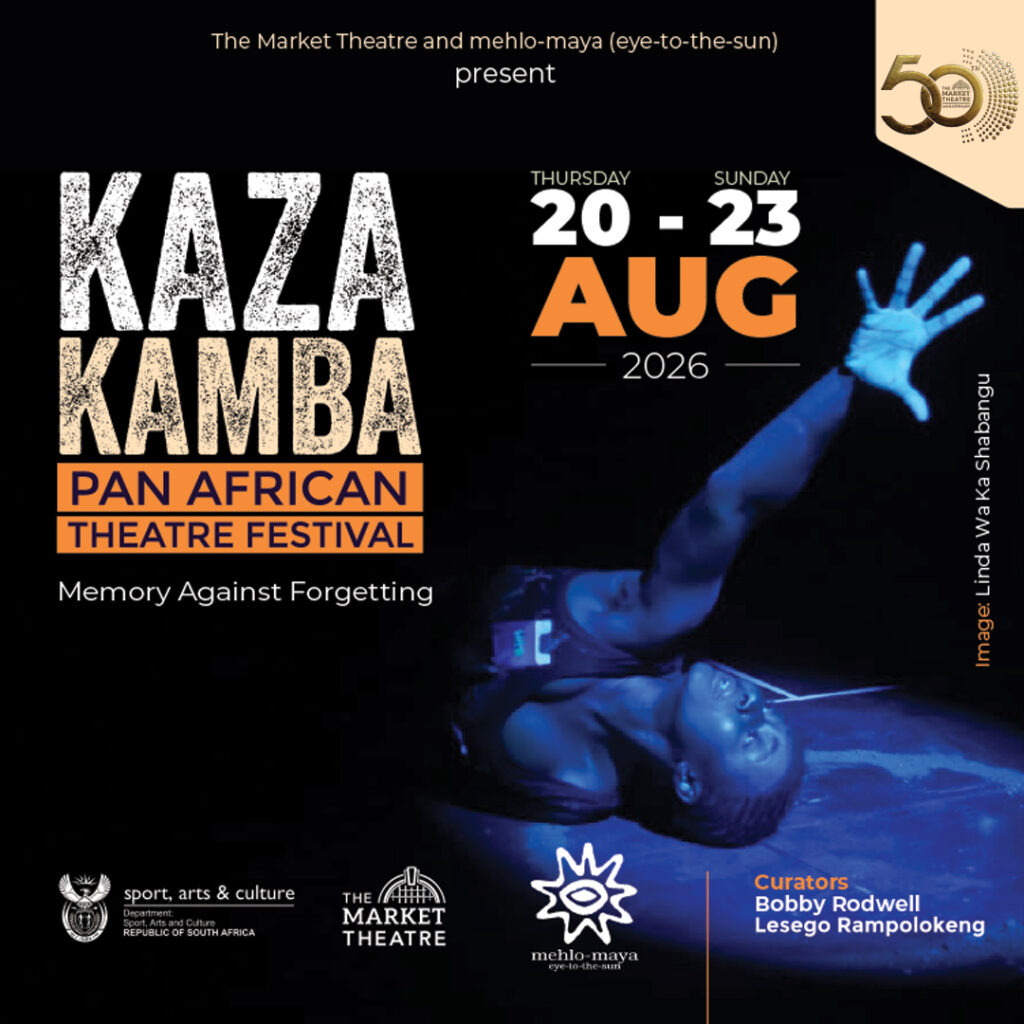
iPhupho L’ka Biko mainlines the festival. This very dynamic group brings to life a brand new multidisciplinary piece which revisits the Marikana massacre both in memory and mirror. Marikana Still…fontein is a lament for the fallen, for the living, a reflection on fractured solidarities and a call to reclaim a Pan-African imagination rooted in dignity, memory and collective liberation.
Southing the Sound with Yonela Mnana (piano), Lesego Rampolokeng (poetry) and Gontse Makhene (Percussion). This is an expressive artistic ensemble that fuses harmony, spoken word and ambient percussion, spearheaded by the ever fearless and provocative poet and author, Lesego Rampolokeng. Sounding the South is not just a melting pot for piano, poetry and percussion; it is an estuary of communal thought and a confluence of critical yet therapeutic reflection urgently needed in this country and beyond.
Theatre Productions include the ever relevant play Skierlik based on a tragic South African event of 14 January 2008 that took place in the informal settlement, Skierlik. Thomas returns to the place where his wife and young daughter were killed in a racially motivated shooting. This is a story of love, loss, and hope, and paints poetic pictures with words. The play is written and performed by the skilful storyteller, Phillip Dikotla.
The Dying Need No Shoes joins us from the Kenyan International Theatre Festival. This thought provoking play, written by Fred Mbogo, directed by Alacoque, and performed by Emmanuel Shikuku and Ann Keveli, reminds us that memory starts at home. Purity Munanda finds herself in a room with her father after years of silence and fear. All the buried trauma comes to the surface. What begins as a tense confrontation soon unfolds into a gripping battle of truth, power and survival as dark family secrets are exposed.
A Season of Hillbrow, a re-imagination of Arthur Rimbaud’s Season in Hell, is staged by The Windybrow Arts Centre. It asks what ‘hell’ might mean in the unfinished present of post-apartheid South Africa. A Season in Hillbrow brings the fire into post-apartheid Johannesburg, where young people from Hillbrow turn the city’s abandonment and reckless multilingual life into poetry, movement, voice and collective rebellion. The play is performed by the students of The Windybrow Arts Centre and directed by Sibahle Mangena and Gerard Bester.
Kaza Kamba Film Festival includes the classic revolutionary film, The Battle of Algiers (1966) as memory; and Sudan…Remember Us (2024) with a discussion by the Sudan Solidarity South Africa members following the screening. This film is an important reminder of Memory Against Forgetting. The words of our poets in Word Down the Line (2015) seek to ask South African poets about our identity and political poetic journeys through Black Consciousness and Pan Africanism, asking who we are today.
Bioscope Beyond Borders is a new project that will be launched, set up as a small cinema in the Lindelani Buthelezi Gallery with 10 chairs and a range of South African films dedicated to migration and identity. People are invited to join films at any time and watch short films that are looped and run for 20 minutes. The Bioscope stands on its own, inviting the individual to watch and interpret the films as a singular experience. Bioscope Beyond Borders is a mobile festival and will be taken to any cultural events in the country, and will be presented at the Warrenton Festival in November, in the Northern Cape.
Kaza Kamba Workshops are key to the festival, where young and old, starting out and experienced practitioners share ideas. Five workshops covering voice, music, drumming, chanting, movement, languages, are offered—including a workshop for youth and children from as young as three years.
Book Launches include Segopotso, a compilation of 17 plays from 1976 to 1986, most never published before, including Maishe Maponya, Zakes Mda, Fatime Dike and Matsemela Manaka. Edited by Vanessa Cooke, Lesego Rampolokeng, Samu Mfuphi and Bobby Rodwell.
Rising to Palestine: Africans in Solidarity for Decolonisation and Liberation, edited by Raouf Farrah and Suraya Dadoo with articles from African scholars connecting struggles from Gaza to Sudan, the DRC and Western Sahara.
Play Readings is our new development wing. Two new plays by Khutjo Green (Maki Next Door), and Jonathan Maseng (Sobukwe) will be presented to an audience for comments and debate.
The Kaza Kamba Pavement Café will be open from Thursday to Saturday night in The Market Theatre Precinct, with music and an open mic and lots of lovely food and drinks to purchase, as well as stalls with materials, clothing, earrings and all manner of goodies.
In short, there is a lot to see!
All documentary films and workshops are FREE. Tickets for plays and music shows are available on Webtickets.
Do not miss this vital festival, critical to our country today. It presents a weekend of live performances, film, workshops and debate on Pan Africanism. Everyone is most welcome!
ENDS
The Market Theatre is a division of The Market Theatre Foundation, an agency of the Department of Sport, Arts and Culture.
For enquiries, please contact Bongiwe Potelwa (Publicist at the Market Theatre Foundation) at bongiwep@marketheatre.co.za or (011) 832 1641.
For reduced price block bookings (of 10 or more) and school groups, contact Anthony Ezeoke at AnthonyE@markettheatre.co.za and 083 246 4950, or Khanyisa Titus at
khanyisat@markettheatre.co.za and 065 955 7182.